10 instrumental ideas from the SHARE OR SUBSCRIBE conference in Amsterdam
Hosted by Frame Magazine and Amsterdam Design Post, SHARE OR SUBSCRIBE brought thought leaders and pioneering designers together to investigate and discuss how the sharing economy will impact the future of spaces, products, and services, such as coliving and coworking.
Today, the sharing economy promises convenience, ease, speed, and affordable access to resources without the financial, emotional, social, or physical burdens of ownership. But will this movement truly be a change of paradigm, or will it dissipate as the millennial generation grows up? To what degree will access replace ownership? How do we design spaces and products to be shared in an era of post-ownership?
Bas van de Poel (creative director of SPACE10), Kelsea Crawford & Antonin Yuji Maeno (co-founders of Cutwork), and Alice Hauge (futurist and architect of UNStudio), were invited to share their experiences designing around this movement, the key challenges we face to make the transition, and the social, economic, and environmental benefits that could be unlocked with such solutions.
Here are 10 instrumental points, insights, examples, questions, and problems from the evening.
1. At the current rate of production and the way we produce thing, we would need 3 planets by 2050...
We simply aren’t building enough affordable homes to keep up with the demand. In order to house all the new earthlings, we would need to build a city the size of Paris every week, which is insane... So it’s not really business as usual. The bottomline is that our cuties are becoming unsustainable, unaffordable, and socially unequal.
- By 2050, there will be 2.2B more people on Earth
- Inequality is on the rise: it’s only becoming more difficult for people to access affordable, adequate, and secure housing
- Ironically even though we live closer together and are more connected though our phones and digital technologies, we also feel more lonely and anxious and stressed than ever
- The world population is aging rapidly: The older generation and the youngest generation are both growing at accelerating rates, and this will put huge stress on our economic, health, and social systems, like housing
— Bas van de Poel, SPACE10
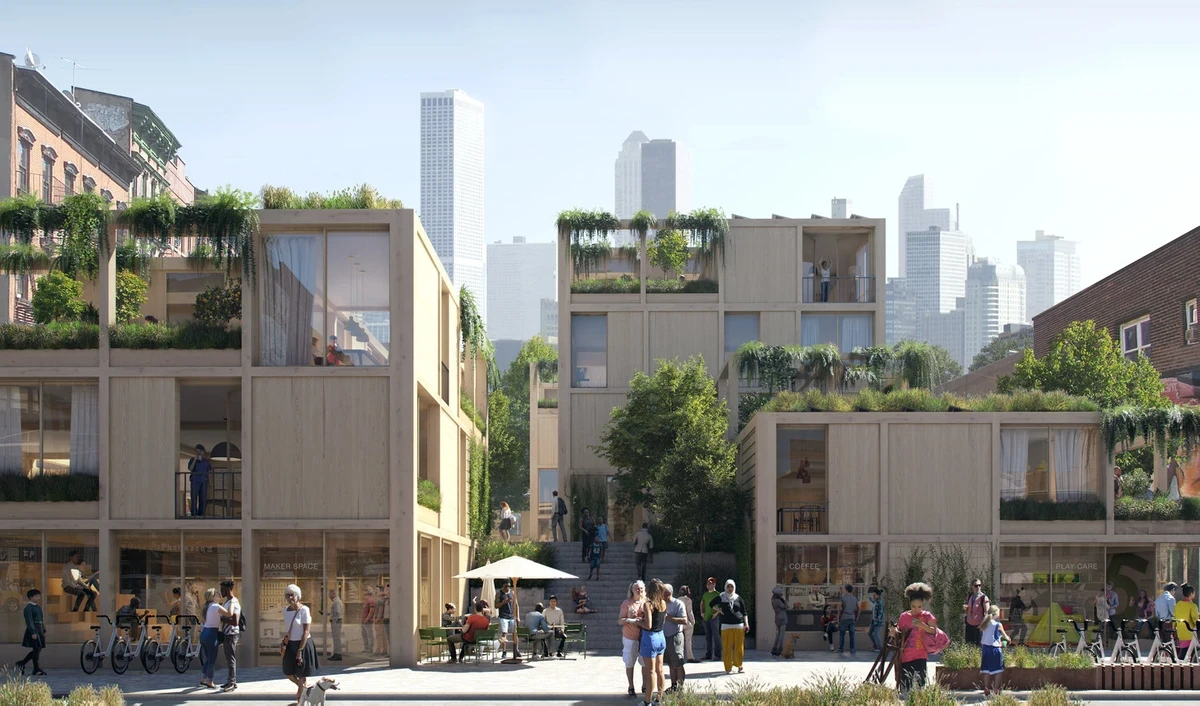
The Urban Village Project by Space10 wants to reinvent the way we live (Source: Effekt)
2. Sharing can be an answer to a lot of these problems. Here’s how...
In collaboration with EFFEKT Architects and IKEA, SPACE10 developed the Urban Village Project – a vision for how to design, build, and share our future homes, cities, and neighbourhoods – all while promoting happier and healthy ways of living in affordable and resource self-sufficient environments. SPACE10 developed the project upon three critical pillars:
LIVABILITY
- Multiple apartment types instead of standard, family homes—so whether you’re single, a family of four, a retired couple or a group of students, you have options.
- Shared facilities and services: access to what you need on a daily basis, such as communal dinners, shared daycare, urban gardening, fitness, groceries, and shared transportation.
- Centralized access through digital platform: a tool that would enable you to nurture your real-life communities and connect you to your subscriptions, services and facilities.
SUSTAINABILITY
- Today, living sustainability is difficult, inconvenient, and burdensome. How do we design to make this a no- brainer and just a normal and natural part of life?
- Integrated solutions like water harvesting, renewable solar energy, self-grown or locally grown food, and localised composting.
- Shared resources: instead of every household having to buy and store the same items—like that drill for that once-a-year job—such items are shared between many, helping keep living costs down and care for the planet up.
- Built with locally sourced cross-laminated timber – a wood that comes with huge environmental advantages and outperforms steel and concrete on multiple levels.
- Modular building system, where almost all components and materials can be disassembled and replaced, reused and recycled over the lifespan of the building.
AFFORDABILITY
- To make truly affordable homes a reality, we need to bypass the interests of short-term investors and challenge existing models of development—the two culprits behind rising housing prices in almost every major city.
- A standardised modular building system that would be pre-fabricated, mass-produced and flat-packed— all of which would help drive construction costs down.
- Instead of traditional rental model, we suggest a subscription model: A base subscription for water, light, etc. Add-on subscriptions like netflix and daily food,
- Decrease living costs and increase disposable income to invest further into the home and buy actual shares of the home – progressively gaining ownership with future ability to sell these shares of the space.
- If you subscribe with more people, you can hopefully get the prices down.
— Bas van de Poel, SPACE10
3. We believe that today we are in a similar position to 1834, when Elisha Otis Graves invented the elevator...
The elevator gave rise the commercial office tower and the modern apartment block. Today, two key inventions are radically changing the way we live and work: the mobile computer and wifi networks. These technologies free space from predefined functions. No longer does a kitchen just need to be a kitchen, or an office just an office, or a bedroom just a bedroom. When it comes to spatial design and products, all of the lines are blurring.
If the challenge of the last century was to densify and build vertically, the challenge of today is to build more elastically.
— Kelsea Crawford, Cutwork
4. We are living through a fundamental shifting
the ways we live, work, and produce...
In addition to the rise of the sharing economy and rapid urbanization, we are seeing three fundamental shifts that we believe are important to consider in our design process:
- Fall of the Mono-nuclear Family: mono-nuclear families have fallen below 15% of households in more and more major cities.
- Rise fo the Freelance Workforce: In 1989, only 6% of the workforce was freelance. Today, the us is already over 40% and by 2020, 43% of the global workforce will be freelance.
- End of Mass Production: we no longer need to subscribe to the unsustainable logic of mass production in the 21st century. We can design custom products and produce affordably at price points that can compete with industrial scale manufacturing.
— Kelsea Crawford, Cutwork
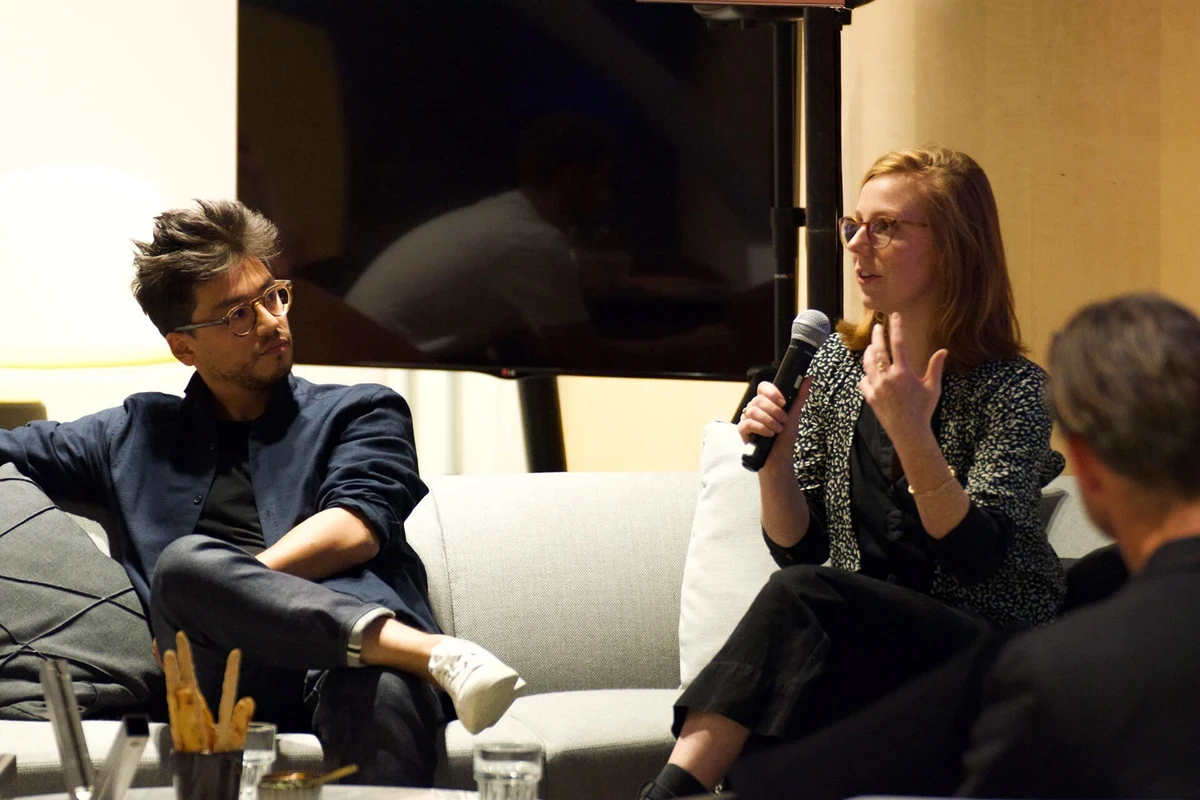
Kelsae Crawford and Antonin Yuji Maeno from Cutwork Studio (Credit: Frame Magazine)
5. For us, it was not just about designing objects and spaces. It is about crafting the industrial system to build them...
Using high precision laser tube cutting, we can cut and score metallic tubes and allow them to be bent by hand. This enables us to ship flatpack for on-site assembly. As digital design files, these products can be manufactured in any factory with a laser tube cutter, allowing the products to be produced locally, closest to the end-user, greatly reducing carbon emissions form shipping. The speed of this production process allow us to produce custom or specialized products for all our projects both giving us full control of our projects from concept to manufacturing and freeing us from the logic of 21st century mass production.
— Antonin Yuji Maeno, Cutwork
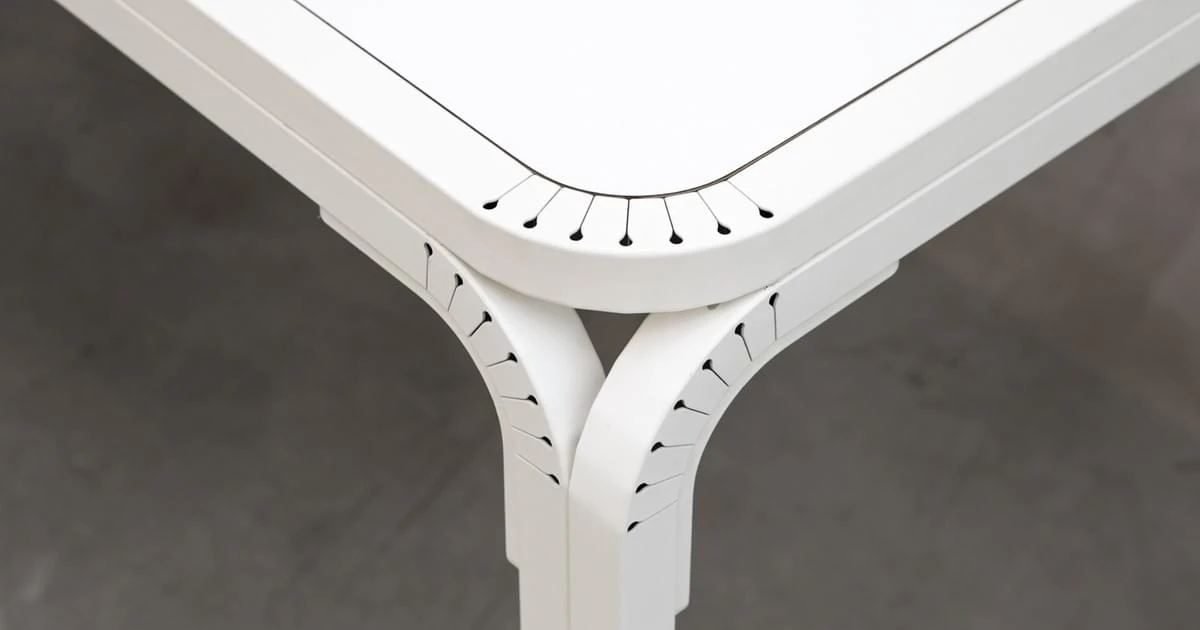
The precision laser tube technology developed by Cutwork.
6. What is the future of the shared environment and the next urban block?
The rise of coworking and coliving are on track to be most disruptive thing to happen to real estate since commercial office tower and the modern residential block. We are seeing developers realize that blocks with a diversity of functions are far more valuable than a building of a single type of space. It’s like comparing a mono crop to a diverse forrest ecosystem. Which makes a better habitat and provides a diversity of resources? We believe the future is shared and see blocks combining more and more types of space into one, such as coworking and coliving spaces.
Through Cutwork’s research lab, we’ve developed a Cohabitation Unit – a concept space, which addresses the rising challenges of urbanization and has engendered 5 Points of Shared Architecture our studio follows:
- Local Integration: design the building to be porous and woven into the local social/cultural fabric. Public rooftop gardens and open access ground floors (cafes, coworking spaces, event spaces, etc.) generate magnetism and circulation with the neighbourhood, allowing the space’s community and the surrounding locals to merge and mingle seamlessly.
- Living Façade: the facade is a ‘thick’ inhabitated space, rather than a flat glazed surface. It is a social space made up of many shared balconies – vertical living-rooms that act as an extension and intersection between individual spaces. It is designed as a system to host plants, activating the local biodiversity and reintegrating nature into the urban landscape.
- Seasonal Envelope: the outdoor spaces and the building envelope are designed to be adaptive to different climate conditions, enabling these spaces’ to be used dynamically year around.
- Compact, Versatile Individual Spaces: individual living spaces are compact and smartly designed to be reconfigured for different activities – sleep, eat, read, work, host and so on – all in the same room.
- Generous Shared Spaces: the communal spaces are numerous, diverse, and spacious. They are designed to encourage social interaction, facilitate meaningful exchange, and help build community between residents, members, or visitors alike.
— Antonin Yuji Maeno, Cutwork
7. Some critical questions to ask ourselves as we develop shared spaces...
If architecture and design have a role to play to encourage interactions and have people share more, it’s important to ask ourselves:
- Are we leaving enough blank space to be left for interpretation?
- What’s the right balance between prescriptive versus descriptive design in shared spaces?
- How can the design enable people to appropriate or project themselves into the space and foster a sense of belonging?
- Can the space evolve and sustain different functions and activities?
- Can the space be used in ways I can’t even anticipate yet?
- How can the space seamlessly integrate itself within the local fabric, neighborhood, and community?
- How can changes at the product scale catalyze changes at the urban scale?
— Kelsea Crawford, Cutwork
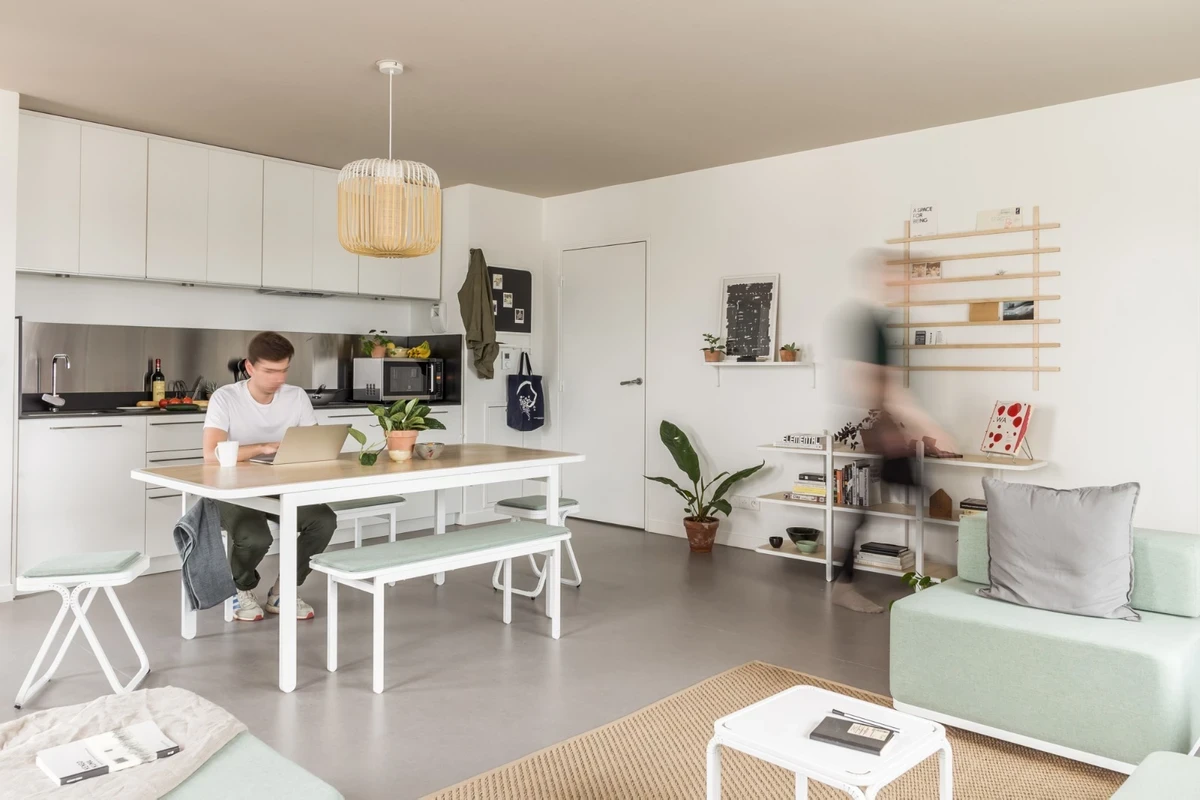
Flatmates, the Parisian coliving space (credit: Handover Agency)
8. Subscription models can open up products to whole new user groups, but also come with unique challenges...
USM, a furniture maker, was concerned if their original furniture system would remain relevant in a digital era. It was designed for paper-centered work spaces, so we were asked to redesign the system for contemporary workspaces which need a lot less paper and a lot more agility and flexibility. We created a hyper agile system that can be changed over time for unexpected needs.
By nature, this product wants to become a service because a lot of these companies and coworking spaces simply can’t buy a huge set of this kind of furniture. It’s too expensive; it’s too unwieldily; they don’t know when they’ll need to move to a new space or scale down. Moving it to a subscription model actually lowers that barrier to entry and makes it easier for flexible working operators to subscribe.
The dream of this would be that you take out a subscription for the USM system and be able to reconfigure the future in your space over any given time period. The other opportunity we see is for updates. On a subscription based model, subscribers can have that opportunity to gain from updated designs. As this is high-end furniture, this would open up the product to a whole new user group.
— Alice Haugh, UN Studio
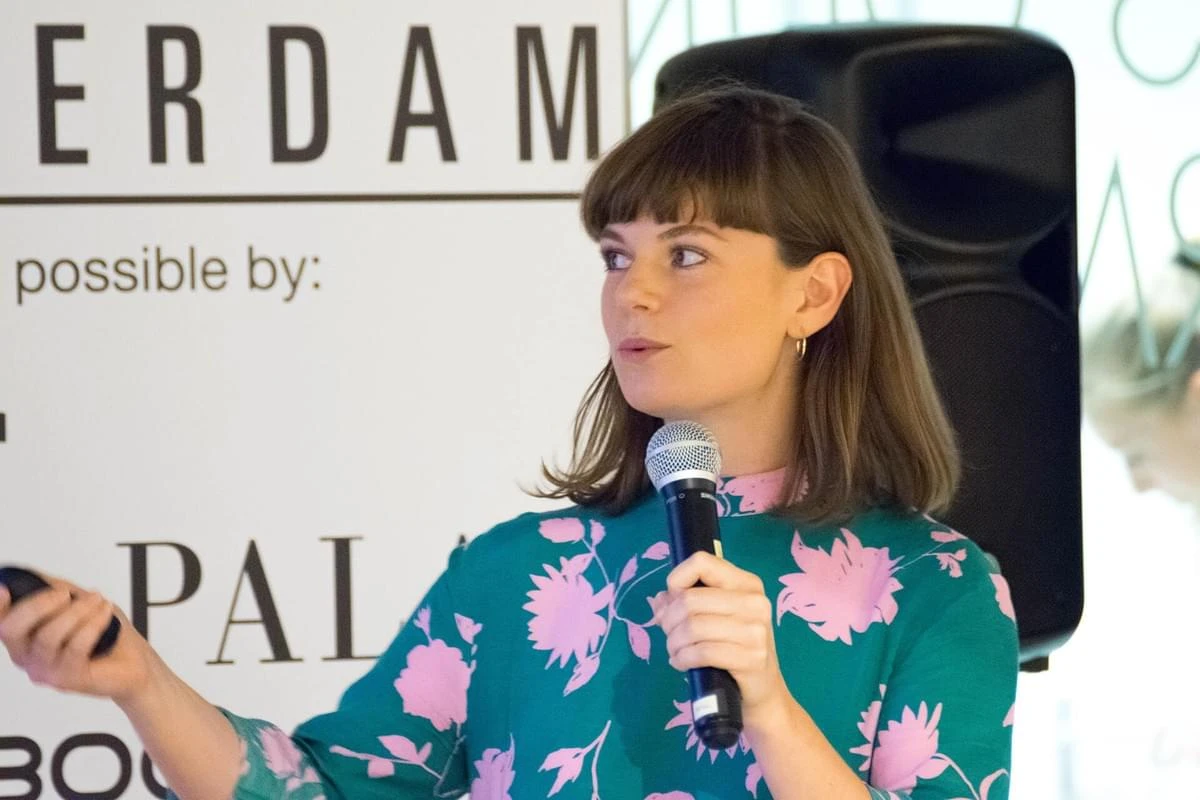
Alice Haugh, UNStudio, presenting at SHARE OR SUBSCRIBE conference (Credit: Frame Magazine)
9. When you shift away from an ownership relationship to a product, something is lost...
There was a promise of the sharing economy that it would be sustainable and convenient – a utopia of sorts that would move is into a new paradigm of production and consumption. But in reality it didn’t always work out. People stuck Bird Scooters on top of lamp posts and dislocated whole flocks of the scooters out on to the beach.

An e-scooter
These human behaviors were unexpected and simply point out it’s difficult to predict how new shared products or services will be accepted, or may even likely face opposition or resistance to the change of convention or a market shift that such a service or product may pose. How can design foster acceptance, ownership, or responsibility both for those who access but also for anyone who is directly or indirectly impacted? How do we make sure these are relationships and not just transactions?
“This might be quite contentious, but I believe designers should stop designing products, and start designing businesses.”
— Alice Haugh, UN Studio
10. Let’s be honest about the challenges of circularity...
We were asked to design a fully circular hotel from the inside out (including a coworking space, coliving space, a market, and a restaurant). To illustrate the complexity of the system, here is how it would need work just for the restaurant. Essentially everything going in and out of the restaurant needs to be closed into a looped system – to either remain within the site or process it back into the supply chain. The closer materials stay to the inner circle of maintenance, reuse, and recycling, the better.
It’s not very appealing to push such a system from the top down. We wanted to incentives the system form the bottom up, so we thought about a sort of token or credit that will incentive keeping these resources within the site - to buy for the local market or for members to contribute their time to the local farm.
Additionally, we looked at all the individual components within the hotel (furniture parts, lighting, soap, toilet paper, washing machines, etc.) and when these things need to be replaced, or repaired, or fixed. We discovered lots of sustainable products that are designed modularly, but discovered that are very few services for disassembly to move these products through their lifecycles.
As designers, we can input all of a product’s materials into a materials passport that’s carried with the materials as they move around. However, the circular service industry desperately needs investment and pioneering entrepreneurs of its own to unlock the full potential of circularity. And ultimately, people need to shift their behavior from buying, using, throwing away into something much more complex and messy.
— Alice Haugh, UN Studio
About The Author: A scientist trapped in an artist’s body, Bryce directs the communications and brand strategy for Cutwork, an architect design studio focused on new ways to live and work. Projects include Station F, the world’s largest coliving space, and Flatmates, the first large-scale coliving space in Paris. Obsessed with data, Bryce believes that shared space is essential to the future of city growth and is dedicated to helping pioneer this movement. In collaboration with Co-liv and the Coliving Diaries, he is directing the Global Coliving Survey, which is the first coliving survey designed to give a voice to coliving residents, understand the emerging market’s drivers and the impact coliving has on individuals, communities, and society.

You can find Bryce on Cutwork and on .
Almost done…
We just sent you an email. Please click the link in the email to confirm your subscription!